

The National Capital Region (NCR) has officially entered a “deep freeze.” On Wednesday, Gurugram recorded a minimum temperature of 0.8°C, sending shivers across the city and marking one of the coldest days in recent history. This extreme dip comes just 48 hours after the city hit a near-record low of 0.6°C.
The Great Temperature Flip: Plains vs. Hills
In a strange meteorological twist, the plains of Haryana are currently significantly colder than popular hill stations. While Gurugram residents woke up to near-freezing temperatures, the mountains were surprisingly mild:
| Location | Temperature |
| Gurugram | 0.8°C |
| Shimla | 8.8°C |
| Mussoorie | 7.7°C |
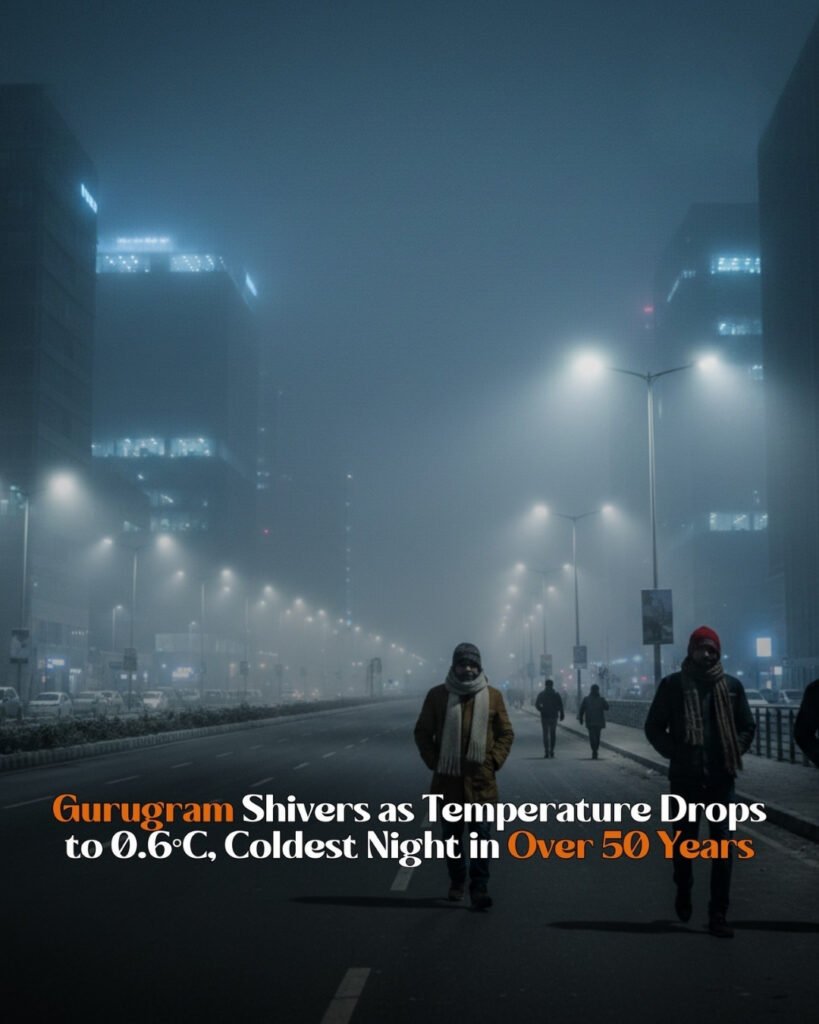
Why is this happening? Meteorologists at the IMD explain that a “Western Disturbance” is currently hovering over the Himalayas. This creates a cloud cover that acts like a blanket, trapping heat in the hills. Meanwhile, the plains of NCR have clear skies, allowing the day’s heat to escape rapidly into the atmosphere—a process known as radiative cooling.
Frost and Fog: Impact on Daily Life
The extreme cold hasn’t just brought low numbers; it’s visibly changing the landscape:
- Frost Formation: Residents in several sectors reported seeing “pala” (ground frost) on car windshields and park benches for the first time this season.
- Health Hazards: Doctors are advising citizens, especially the elderly and children, to avoid early morning outdoor activities to prevent respiratory issues and hypothermia.
- Travel Delays: Dense fog combined with icy winds continues to slow down traffic on the Delhi-Gurgaon Expressway and affect train schedules.
How Long Will the Cold Wave Last?
According to the India Meteorological Department (IMD), severe cold wave conditions are expected to persist for the next 48 hours. While a slight rise in temperature is predicted toward the weekend due to a change in wind direction, the “bone-chilling” mornings are here to stay for a while longer.