
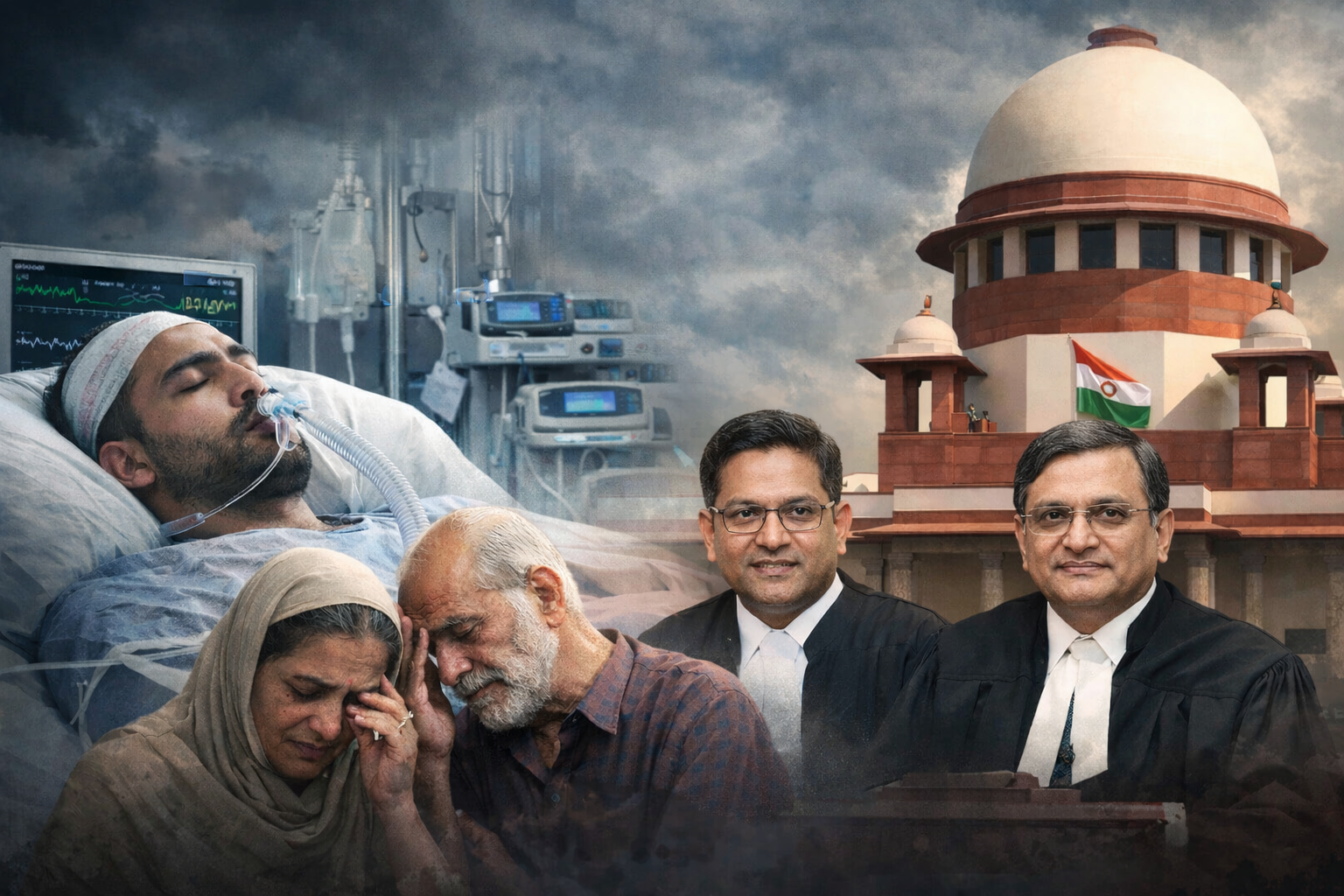
In a historic and emotionally powerful decision, the Supreme Court of India allowed the withdrawal of life support for Harish Rana, a 31-year-old man from Ghaziabad who had been in a persistent vegetative state for more than 12 years.
The verdict has reignited a nationwide conversation about the right to die with dignity, medical ethics, and the emotional burden carried by families of terminally ill patients. For many, this ruling represents not only a legal milestone but also a deeply human story of compassion, suffering, and difficult choices.
The Story of Harish Rana
The case of Harish Rana is both tragic and deeply moving. In 2013, Rana then a young engineering student associated with Panjab University suffered a severe traumatic brain injury after falling from the fourth floor of his accommodation.
The accident left him in a persistent vegetative state, a medical condition where a patient may breathe and show sleep–wake cycles but remains unconscious and unable to interact with the environment.
For more than a decade, Rana survived through medical support, including feeding through tubes and continuous clinical care. Doctors confirmed that there was no realistic chance of recovery, leaving his family facing a heartbreaking reality.
His parents, who had cared for him tirelessly for over 12 years, eventually approached the court seeking permission to withdraw life-sustaining treatment.
Supreme Court Allows Passive Euthanasia
In March 2026, a bench of J. B. Pardiwala and K. V. Viswanathan delivered a landmark judgment allowing passive euthanasia in the case.
The court permitted the withdrawal of medical treatment, including clinically assisted nutrition, which had been keeping Rana alive.
The judges emphasised that continuing treatment in such circumstances merely prolongs biological existence without improving the patient’s quality of life. They also acknowledged the emotional strength of Rana’s parents, who had cared for their son through years of uncertainty and suffering.
In a powerful observation, the court noted that sometimes true love for a child is not just about keeping them alive but freeing them from prolonged suffering.
This verdict is widely considered the first practical implementation of India’s passive euthanasia guidelines, making it a defining moment in the country’s legal and medical history.
Understanding Passive Euthanasia
Passive euthanasia refers to the withdrawal or withholding of life-sustaining medical treatment when recovery is medically impossible.
Unlike active euthanasia, where a deliberate action is taken to end life, passive euthanasia allows the underlying illness to take its natural course once artificial support is removed.
In India, the legal framework for passive euthanasia was established in the landmark Common Cause judgment of 2018, where the Supreme Court recognised the fundamental right to die with dignity under Article 21 of the Constitution.
However, until the Harish Rana case, these guidelines had rarely been implemented in such a clear and direct manner.
A Landmark Moment in India’s Legal and Ethical Debate
Legal experts say the judgment could influence how future cases involving terminal illness and irreversible medical conditions are handled.
The Supreme Court also suggested that the government should consider creating a clear legislative framework for passive euthanasia so that families and medical professionals have better guidance in end-of-life decisions.
The case has sparked debate across the country raising difficult questions about life, dignity, medical responsibility, and the emotional toll on families caring for patients with no chance of recovery.
For many, the ruling represents compassion and humanity. For others, it highlights the urgent need for stronger laws governing end-of-life care.
Compassion, Dignity, and Difficult Choices
The story of Harish Rana is not just a legal case—it is a reminder of the profound moral and emotional challenges faced by families and doctors when life-sustaining treatment no longer offers hope.
After more than a decade of medical struggle, the Supreme Court’s decision acknowledged a difficult but important principle: every individual deserves dignity, even in death.
As India continues to debate the ethical boundaries of euthanasia and end-of-life care, this landmark ruling may shape future policies and legal frameworks for years to come.